PayID is only a payment feature; it does not establish that a casino is lawful, licensed in Australia, fair or able to pay.
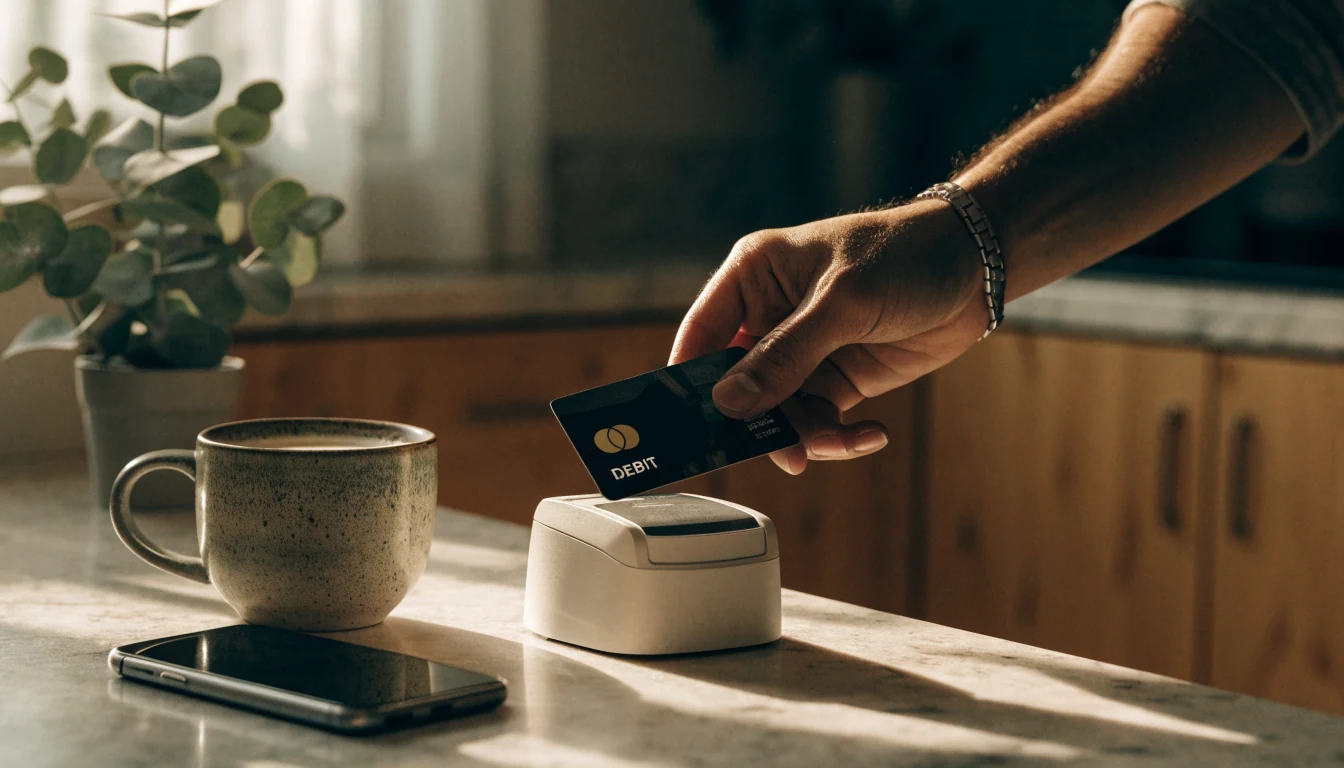
A PayID option is a payment feature, not proof that a real-money pokies service is lawful, licensed, fair or willing to pay winnings. If you are considering an online casino payment from Australia, check the legal position before you enter any payment details: the Interactive Gambling Act 2001 prohibits operators from providing online casino games, including pokies, to people physically located in Australia. A foreign licence does not change that position or amount to an Australian licence.
That distinction matters when a site describes itself as “licensed”. Do not treat a badge, logo, licence number or statement on the casino’s own pages as independent confirmation. Check whether the claimed regulator has a public register and whether the operator’s legal name and licence details can be verified there. Then establish what that licence actually covers and where it applies. A licence issued elsewhere is not evidence that the operator is authorised to provide real-money online casino games in Australia. If a claim cannot be checked in a regulator’s public records, treat it as unverified rather than as a safeguard.
If you’re looking for online pokies with PayID in Australia in 2026, check each operator’s payment options and terms before depositing. The details below highlight only the information available for each entry.
MrPacho
You can note the stated minimum deposit of A$30. Payouts are listed as 30–120 minutes for crypto and 24–72 hours for fiat.
Rollero Casino
You can note its listed Curaçao Gaming Control Board licence, OGL/2023/176/0095, held by Hollycorn N.V.
Thor Casino
You can note its listed Curaçao licence with Antillephone N.V. (Versus Odds B.V.) and a minimum deposit of EUR 20.
Neospin
You can note its listed Curaçao Gaming Control Board licence, OGL/2023/176/0095, held by Hollycorn N.V.
Lucky Dreams
You can note its listed Curaçao licence and the A$20 minimum deposit specified for POLi.
Kingmaker
You can note the stated minimum deposit of A$30. Payouts are listed as about 90 minutes for crypto and 1–5 days for fiat.
Uptown Pokies
You can note its Curaçao licensing and that it has been operating since 2017; the stated minimum deposit is A$20.
WinSpirit Casino
You can note its listed Curaçao eGaming licence, OGL/2024/923/0383, with Antillephone N.V., and a minimum deposit of A$30.
SkyCrown
You can note its Tobique Gaming Commission licence and A$30 minimum deposit. Payouts are listed as about 10–15 minutes for crypto and 1–5 days for fiat.
Bizzo Casino
You can note its listed Curaçao Gaming Control Board licence, with TechSolutions Group N.V.
Before making any real-money PayID payment, compare the recipient details shown to you with the operator identity and payment information the site provides. A mismatch, an unexplained change of recipient, or a request to send money to a personal account is a reason to stop and seek clarification—not a detail to resolve by guessing. Do not rely on a familiar logo or a polished cashier page to establish who controls the recipient account.
PayID payments cannot be reversed after you confirm them. That makes checking the information before authorisation essential: a mistaken or misdirected payment is not something you should expect to recover simply by asking the bank to undo it. Never confirm a payment while the recipient’s identity or purpose remains unclear.
Keep a record of the information presented before you act, including the operator’s stated legal identity and the payment recipient details. If those details change between the site’s instructions and the payment screen, stop. A legitimate-looking explanation for a change is still not independent verification. Contact the service through a channel you have independently confirmed, rather than replying to a message that supplied the payment request.
The name on your bank account should match the name on your casino profile. Differences can create account and withdrawal problems, particularly where the operator checks that the payment comes from the account holder named on the profile. Do not use another person’s bank account to get around a mismatch, and do not alter a profile with invented details to make the payment appear consistent. Correct genuine errors through the relevant account process before taking any further action.
Also confirm that the PayID you intend to use is the one registered with your bank. If you use a mobile number or email address as your PayID, check it against your bank’s records rather than relying on memory or an old payment contact. A mismatch between the details you enter and the PayID registered with your bank can prevent the transaction from being handled as intended.
Treat requests to create another account as a warning sign, not a workaround. Multiple accounts at the same casino may lead to a ban or forfeiture of winnings under the operator’s rules. If your name or account details are wrong, resolve that issue with the existing profile; opening another one can make the record less clear.
Prompts that pressure you to act immediately do not make a payment safer. Pause if the site’s legal identity is unclear, the claimed licence cannot be independently checked, the recipient details do not match the stated operator, or your bank and profile names differ. A PayID payment may be quick, but speed is not a substitute for checking who receives it.
The practical test is simple: can you verify the operator’s identity and claimed licence through a public regulator source, and do the account and payment details match? For people in Australia, even a verifiable foreign licence does not make an online casino lawful to provide real-money games locally. If the service is prohibited, the safer payment decision is not to transfer.
For someone in Australia, the first criterion is not speed, fees or a low starting amount. It is whether the service can lawfully provide real-money online casino games to people here. Under the Interactive Gambling Act 2001, operators cannot provide those games to customers physically located in Australia. A payment option does not change that position, and comparing payment features should not be mistaken for a recommendation to use an offshore casino.
That makes “best” a misleading label for PayID pokies. A cashier showing PayID tells you only that the operator claims to accept that payment method. It does not establish that the service is lawful in Australia, that its terms are fair, or that it will pay a withdrawal. A polished payment page is not a substitute for those checks.
If you are assessing information about PayID, put each claim in its own category rather than letting one attractive feature stand in for the rest:
| Criterion | What the claim can tell you | What it cannot prove |
|---|---|---|
| Payment timing | The stated processing expectations for a transaction | That a real-money casino may legally serve Australian customers |
| Fees | Whether a fee is attributed to PayID or to the operator | That the overall service is safe or lawful |
| Minimums | The amount the operator says it will accept or pay out | That the terms suit you or that funds will be returned |
| Withdrawal handling | That the operator describes an internal review process | That a particular payment will be approved or arrive on a promised schedule |
This is a way to assess claims, not a shortlist of services. In Australia, a favourable result on one row cannot cancel the legal problem in the first row: real-money online casino services are prohibited when provided to people here.
PayID transfers can move quickly, but transfer speed is only one part of a payment experience. It does not tell you how an operator handles an account, whether it accepts a withdrawal request, or when it releases funds. Withdrawal processing speeds can vary between casinos; a specialist review may describe a particular experience, but that should not be treated as a standard that every operator follows.
So, if a page advertises fast PayID payments, read that as a narrow claim about payment processing—not as evidence of reliable withdrawals. A fast transfer into an account does not establish that money can be withdrawn on equally favourable terms. Nor does it make the underlying service lawful for Australian customers.
PayID itself does not charge a transfer fee. Reputable venues also do not add a fee for PayID deposits or withdrawals. If a payment page mentions a charge, identify who says it applies and what transaction it concerns. A charge described by an operator is not automatically a PayID fee.
Even a clear fee statement answers only a cost question. It does not verify the operator, its terms or its legal status. A service can appear inexpensive on this measure and still fail the more important test. The fee line is not a safety certificate.
A low stated minimum may look appealing, but it is not a sound reason to choose a real-money casino. The amount accepted for a deposit says nothing by itself about withdrawal conditions, account checks or whether the operator can lawfully serve you in Australia. A smaller entry amount does not remove the risks attached to the service.
If you are reviewing payment information, consider whether the stated minimum is clearly explained and whether deposit and withdrawal terms are presented separately. Do not infer that a low minimum means fewer conditions or easier access to funds. Those are different claims and need separate evidence.
A useful comparison method has a stop rule: if the service is offering real-money online casino games to people in Australia, payment convenience should not turn that offer into a suitable option. The Interactive Gambling Act 2001 prohibits operators from providing those games to customers physically located here. PayID is a payment system, not permission to provide gambling services.
That is why a “best PayID” ranking would be the wrong tool for Australian players. Payment timing, fees and minimums can describe parts of a transaction, but none overrides the law or guarantees an outcome. When those criteria appear in promotional material, read them as claims—not as proof of legitimacy or a reason to transfer money.
PayID is an Australian digital payment system that lets a person send money using an identifier linked to an account, such as a mobile phone number or email address. It is designed to make bank transfers straightforward without requiring the sender to enter the recipient’s account details each time. PayID is a way to identify where a payment should go; it is not a bank, a gambling service or a guarantee about the recipient.
The system operates through the New Payments Platform (NPP), which enables transfers between participating banks. That infrastructure is why PayID payments can move quickly between accounts. The NPP is the transfer network in the background; PayID supplies the identifier used to direct a payment. Neither one decides whether a particular merchant is trustworthy or whether a transaction is permitted.
For everyday use, that distinction is useful. A familiar payment label can make a service appear more established than it is, but the label only describes the payment method. It says nothing by itself about who controls the receiving account, what the recipient intends to provide, or whether a business is authorised to offer its service in Australia. Payment convenience and legitimacy are separate questions. Easy to confuse.
The phrase “PayID pokies” combines two separate ideas: a bank transfer method and a gambling product. It does not describe an Australian approval or certification. A website displaying PayID is not thereby endorsed by the payment system, the NPP, or a bank. Nor does accepting a particular transfer method demonstrate that a site is fair, that its games are independently assessed, or that it will pay winnings.
Legal Warning
Under the Interactive Gambling Act 2001, operators are prohibited from providing real-money online casino games, including pokies, to people physically located in Australia.
That matters because payment branding is often prominent in online promotions. A logo or a claim that a site supports PayID may tell you what the operator says it can accept, but it cannot establish the operator’s identity, its business practices or its legal status. Those issues require separate checks; the payment network is not a substitute for them.
There is also a significant legal boundary in Australia. Under the Interactive Gambling Act 2001, operators cannot lawfully provide real-money online casino games—including pokies—to people physically located in Australia. This applies whether a website describes itself as local or offshore and whether it offers PayID, another payment option or no payment details on its landing page. The presence of a familiar Australian payment method does not change that rule.
The NPP provides the infrastructure for quick transfers between banks. PayID uses that infrastructure so a payment can be addressed through a memorable identifier rather than relying only on conventional account details. The practical idea is simple: an identifier points to an account, while the participating banks and the NPP handle the transfer.
The network’s role ends at payment movement. It does not assess the quality of a casino, verify a game’s fairness, resolve a dispute about an account balance or promise that a recipient will return money. Those are not functions of a payment identifier or a bank-to-bank transfer network. Treating a fast transfer as a trust signal gives the method more meaning than it has.
This is true of other payment methods too, but PayID can feel especially familiar because Australians may already use it for ordinary payments. Familiarity reduces friction; it does not reduce the need to understand who is receiving the money. A transaction can be technically easy to initiate while still carrying risks tied to the recipient or the service being promoted.
For Australians, PayID is best understood as part of the country’s digital payments environment, not as a stamp of approval for every business that displays it. The NPP helps banks move payments quickly, while the identifier makes it easier to direct a transfer. Neither feature makes an online gambling service lawful or places it under Australian casino regulation.
If you encounter a site promoting real-money pokies to Australians, do not infer that its payment options establish permission to provide those games. Under the Australian legal framework, real-money online casino services are prohibited for people in the country. A payment facility does not override that restriction, and a casino-style website cannot become authorised simply by accepting a locally recognised payment method.
The distinction is the useful takeaway: PayID describes how a payment may be addressed, and the NPP explains the bank-transfer infrastructure behind it. Neither answers the separate questions of legality, operator conduct or consumer protection. Keep those categories apart. That is the point.
A PayID deposit involves two systems: the casino’s payment interface and your bank’s payment service. If a payment instruction is submitted and authorised, the transfer is sent through the banking network. Once the receiving side registers it, the casino can reflect the funds in the account balance. The exact screens and labels depend on the service involved; PayID itself is the payment method, not a guarantee about how a casino handles an incoming transfer.
PayID payments run through Australia’s New Payments Platform, which supports transfers between banks. For casino deposits, the stated completion time is typically seconds. That describes the transfer’s expected speed, not a promise that every payment will appear instantly: the receiving service still has to register the transaction and update the balance.
The sequence can be understood in three stages:
If the balance does not update immediately, check the transaction status in your bank account before taking any further action. A delay in the displayed casino balance does not, by itself, establish whether a transfer has succeeded. Avoid submitting another payment while the first one is unresolved: that could result in a second transfer rather than a correction to the first.
The bank’s own controls matter too. A specialist review reports that a bank may set a daily limit for PayID transfers. Check your bank’s displayed limit and transaction status rather than assuming the casino controls how much your bank will process. This is a bank-side restriction, separate from the casino’s payment process.
There is also an important legal boundary for anyone in Australia. Under the Interactive Gambling Act 2001, operators are prohibited from providing real-money online casino games, including pokies, to people physically located in Australia. A payment method being available does not make the underlying service lawful, and this explanation is not an invitation to fund an offshore gambling account.
That distinction matters because payment infrastructure and gambling law answer different questions. PayID can move money between bank accounts; its presence does not show that a casino is permitted to serve Australian customers. Nor does a fast transfer establish anything about the operator’s status or the outcome of a later payment request. A payment rail is not a licence.
 Pay by Phone Casinos in Australia: Payment GuideLearn how PayID uses a banking app rather than a phone-bill charge, and what to check about withdrawal reviews, bonuses and payment…
 New Australian Online Pokies: Offshore Casino ChecksLearn how the Interactive Gambling Act 2001 applies to offshore pokies, and what to check in licence, withdrawal, payment and bonus claims.
For a lawful transaction unrelated to prohibited online casino services, use your bank’s own transaction record to confirm whether a transfer was processed. Do not treat a pending display on another service as proof that funds have left your account, and do not repeat a transfer simply because a separate balance has not refreshed. Check the bank record first. Be deliberate.
A payment logo is not a licence, and a cashier listing is not proof that a real-money service may lawfully operate in Australia. The Interactive Gambling Act 2001 prohibits operators from providing online casino-style games, including pokies, to people in Australia. So a claim to be “licensed PayID pokies” in Australia deserves particular scrutiny: PayID acceptance does not turn an offshore casino into a locally authorised service.
Before creating an account or sharing personal details, check two separate things: whether PayID is actually listed in the cashier, and what the operator’s licence claim means.
Look for PayID in the site’s own cashier or payment-method information, rather than relying on a banner, a search result or a third-party description. Confirm that the listing applies to deposits; a payment method mentioned elsewhere may not be available for that purpose. If the cashier is hidden until registration, ask the operator to confirm the available method before opening an account.
This check can prevent a mismatch between what a promotion or page suggests and what the payment screen offers. It does not establish that the operator is lawful, that a transfer will be accepted by your bank, or that the operator will pay winnings. Those are separate issues. A payment mark proves only that the site displays a payment claim.
Identify the legal company named in the site’s terms, then compare that entity and its claimed licence with information available from the regulator named by the operator. The Australian Communications and Media Authority is the relevant Australian regulator to consult for information about prohibited online gambling services. A foreign licence, even if it can be verified in its issuing jurisdiction, is not an Australian authorisation to provide real-money casino games to people in Australia.
If the operator gives no legal entity, licence number or regulator that you can independently verify, treat the claim as unsubstantiated. Do not rely on badges, copied licence images or customer-service assurances alone. Public verification should lead to the named regulator’s own information, not just another page repeating the operator’s claim.
 Online Pokies Instant Withdrawals in AustraliaLearn why approval and transfer are separate stages, how payment methods affect timing, and what Australia's Interactive Gambling Act 2001 prohibits.
 Anonymous Crypto Casinos in Australia: What to CheckCompare Bitcoin costs and cashout timing, privacy limits, bonus terms and site checks; a casino’s processed status does not mean funds are…
Keep the checks distinct: PayID on the cashier answers whether the site says it accepts that payment method; a regulator’s public information addresses the operator’s legal status. Neither check guarantees the other. In Australia, the legal position is decisive: real-money online casino services are prohibited for operators to provide. A cashier can be clear. The legal boundary remains.
Reported PayID deposit minimums at offshore online casinos commonly fall between AU$10 and AU$20. That range is a guide to the amounts described in cashier terms, not a standard set by PayID itself. The amount shown by a particular service may differ, and a stated minimum does not establish that the service is lawful or suitable for Australian players.
Some descriptions put the entry point lower, at AU$5. That lower figure comes from a specialist review, so treat it as a reported condition rather than a general market rule. Check the relevant cashier terms directly if you are assessing what an offshore site claims to accept; minimums can change, and a figure repeated elsewhere may no longer be current.
| Reported starting amount | How to read it |
|---|---|
| AU$10–AU$20 | The range commonly reported for operator deposit minimums |
| AU$5 | A lower amount reported in a specialist review, not a general expectation |
The distinction matters if you are comparing advertised terms: a smaller minimum only means less money is required for a deposit under those stated conditions. It says nothing about the likelihood of receiving a withdrawal, the fairness of games, or whether an operator is licensed. PayID availability is not proof of any of those things.
There is also a legal boundary specific to Australia. Under the Interactive Gambling Act 2001, providing real-money online casino games, including pokies, to people located in Australia is illegal for operators. The figures above describe reported offshore cashier terms; they are not an invitation to deposit or a recommendation to use such services.
If you encounter a claimed minimum, distinguish the payment method’s role from the casino’s own rules. PayID is the transfer option; the operator sets the amount it says it will accept. Read the stated minimum as a condition attached to that cashier, not as a promise that a transfer will be accepted or an account will be credited. A low entry amount can look decisive in a comparison, but it is only one figure—and not a measure of legitimacy.
A PayID withdrawal is not simply the deposit process in reverse. The casino must first review the request, and the timing can depend on whether your identity checks are complete. A pending request may therefore remain inside the casino’s system before any transfer begins.
A specialist review reports that some casino-initiated PayID withdrawals have a pending period of 24–72 hours. Treat that as a reported operator-side timeframe, not a standard that applies to every site. The same review describes 12–24 hours for the PayID transfer after approval, with the full time from request to receipt potentially reaching 2–4 days when the pending period is included. These are separate stages: approval and release by the casino, then transfer to your account.
KYC status matters. If identity or account checks are incomplete, the casino may need to review them before approving a payout. Read the withdrawal terms and check your account status before submitting a request; a fast payment method cannot remove a casino’s review step. Keep an eye on the request status, and contact support if it remains pending beyond the timeframe the operator states.
 Bitcoin Pokies in Australia: Payments and ProtectionsExplore how Bitcoin payments work with online pokies, how game credits differ from Bitcoin, and what verification or payment issues may arise…
 Casino Sites That Accept BPAY in Australia: What’s VerifiedLearn why a BPAY mention does not verify casino acceptance, Australian availability, deposits or payouts, and how to assess claims cautiously.
Check the withdrawal minimum as well as the deposit minimum. A specialist review places typical PayID withdrawal minimums at A$20–A$50, but each operator sets its own threshold. The same kind of review reports that some casinos charge A$2–A$5 per withdrawal, while some may deduct A$5–A$10 when a payout is below an internal threshold of A$100 or A$200. These figures are reported examples, not universal charges. Read the cashier terms to see whether a fee applies to your request and whether combining withdrawals would avoid a threshold-based deduction.
Before requesting payment, confirm that your bank-account name matches the name on your casino profile. A mismatch can complicate verification or delay release. PayID details must also match the PayID registered with your bank. Keep records of the request and any messages about review or fees. Small print matters.
For Australian readers, there is an important legal distinction: the Interactive Gambling Act 2001 prohibits operators from providing real-money online casino games to people in Australia. Payment availability does not establish that a service may lawfully provide those games.
A “free credit” claim does not mean the credit is unrestricted or that an offer is available to you. PayID is a payment method, not proof that a promotion is legitimate or that a provider may lawfully offer real-money casino games in Australia. The Interactive Gambling Act 2001 prohibits operators from providing online casino games, including pokies, to people in Australia.
Specialist reviews report wagering requirements often ranging from 30x to 45x the bonus amount. Additionally, operators may enforce maximum bet rules during the wagering period, which, if exceeded, can void the bonus and any associated winnings.
If you encounter bonus terms, read them before taking any action. A specialist review reports wagering requirements of 30x–45x the bonus amount. That figure is not a universal rule: the specific terms determine what applies, including which bets count and when the requirement is met. A large multiplier can leave a bonus difficult to clear, so compare the requirement with the bonus amount rather than judging an offer by its headline.
Check the maximum bet rule during wagering as well. If you exceed the stated limit while working through a bonus requirement, the bonus and associated winnings may be voided. The precise limit and the point at which the rule applies need to be stated in the terms; do not assume that a rule stops applying because the bonus balance has changed.
Also look for conditions that affect eligibility, expiry, game contribution and withdrawal of any balance. If the wording is unclear, do not treat a social post or payment logo as a substitute for written terms. Free credit can come with costly strings.
A casino may display PayID as an available payment method, yet your bank can still decline a transfer. The cashier shows what the operator says it accepts; it cannot guarantee that your bank will process a payment to a gambling merchant.
A specialist review has reported that some Australian banks, including the Big Four, occasionally block PayID transfers to merchants identified as gambling businesses under their acceptable use policies. Treat this as a reported possibility, not a rule that applies to every bank or every transfer. Bank policies and decisions can change.
That distinction matters if you are checking which pokies sites accept PayID. A site’s payment listing does not establish that the bank-side route is available to you. A failed payment may reflect the bank’s policy rather than a problem with your PayID details or the cashier. Do not assume that trying another transfer will resolve it.
If your bank declines a payment, check its current acceptable use policy or contact the bank through an official channel to ask about the decision. Do not try to disguise the recipient or route the payment through another person’s account to get around a restriction. That can create further account and payment problems.
There is also a wider legal context: under Australia’s Interactive Gambling Act 2001, operators cannot lawfully provide real-money online casino games to people in Australia. A PayID option is not evidence that an online casino is authorised to serve Australian residents. Bank acceptance is not approval.
A Facebook post, group comment or private message mentioning PayID pokies is a claim, not proof. A logo, screenshot or confident promise cannot establish that a payment option works, that an operator is legitimate, or that an advertised offer will be honoured. Treat the link and the claims around it separately.
There is an important legal point for people in Australia: under the Interactive Gambling Act 2001, providing real-money online casino games, including pokies, to people in Australia is prohibited. A social media page cannot change that. The Australian Communications and Media Authority is the regulator responsible for enforcing the rules, and access to offshore services may be blocked.
Do not interpret a Facebook post as evidence of an Australian licence. Nor does a PayID reference mean that a payment will be accepted or that winnings will be paid. If a post urges you to act quickly, promises a guaranteed return, or asks you to send money through a personal account, those claims deserve particular scepticism—not a faster click.
If you encounter an operator’s name in a post, check its status through a public regulatory source rather than relying on the page’s own badges or messages. Avoid sharing banking details, identity documents or account credentials through social media. A link’s appearance is easy to copy; independent verification is not supplied by the post itself.
The practical distinction is simple: Facebook can show you a claim, but it cannot make that claim lawful or reliable. Keep the distinction clear.
Select PayID in the cashier, then check that the recipient details are correct and that the PayID matches the one registered with your bank before confirming. PayID payments cannot be reversed, and Australian law prohibits online casino operators from providing real-money pokies to people in Australia.
PayID itself does not charge transfer fees, though a casino may charge withdrawal fees, commonly AUD 2–5. Check the site’s terms before making a payment; a PayID option does not make an online casino lawful to serve people in Australia.
After casino approval, a PayID withdrawal usually arrives the same day, often within 12–24 hours. Internal reviews or pending periods can extend the total time from request to receipt to around 2–4 days.
Your bank sets your daily PayID transfer limit. Casino minimum deposits are commonly AUD 10–20, while minimum withdrawals are often AUD 20–50.
Casino minimum deposits commonly start at AUD 10–20, though some operators accept AUD 5. These are operator-set amounts, and paying them does not make an online casino lawful to use from Australia.
Some sites targeting Australian customers advertise PayID, but that does not mean they are authorised to provide real-money pokies in Australia. The Interactive Gambling Act 2001 prohibits operators from providing online casino games to people physically located there.
Some sites targeting Australian customers claim to offer PayID withdrawals, but that does not establish that they are lawful or licensed to provide real-money casino games in Australia. A foreign licence does not authorise an operator to provide those games locally.